Things to Do in Arequipa: 12 Must-See Spots in Peru’s White City
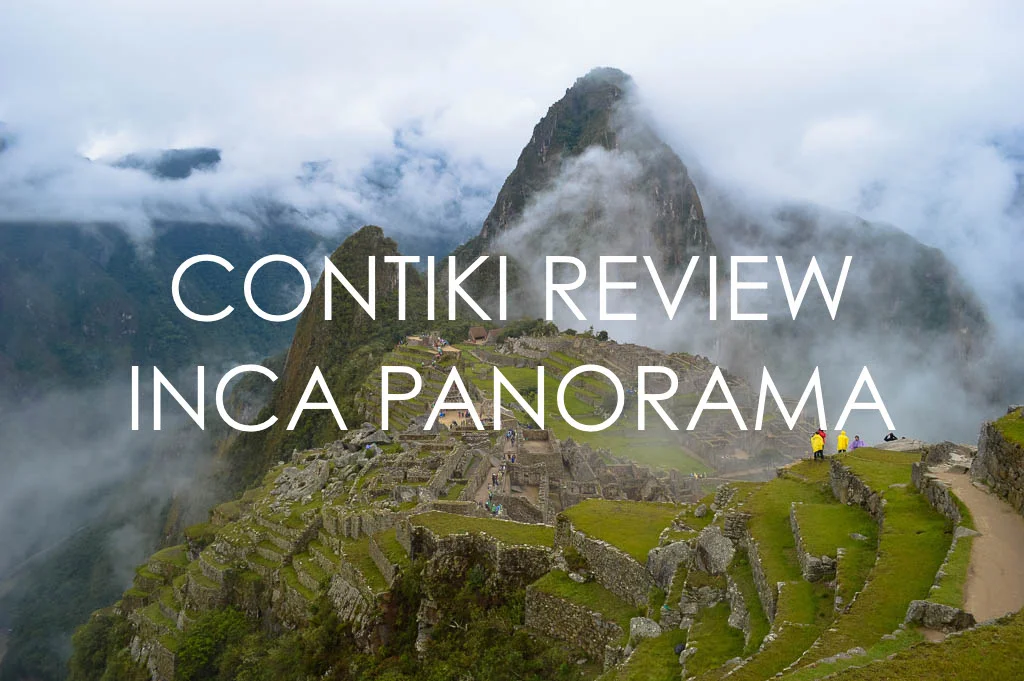
If you’re looking for the best things to do in Arequipa, Peru, you’re in for a surprise. Known as the “White City,” Arequipa is one of the most beautiful (and underrated) places I visited in Peru. Between the volcano views, the dreamy white sillar architecture, and some of the best food I had in the country, I completely fell for this city. Located in southern Peru, Arequipa feels very different from places like Cusco or Machu Picchu. You won’t find Incan ruins here. Instead, it’s steeped in colonial charm, stunning monasteries, and vibrant city life. I only had 36 hours here on my Contiki Peru - Inca Panorama tour, but we packed in a lot. So if you’re short on time or just planning your trip, here are the best things to see and do in Arequipa, plus where to eat and what not to miss.
Plan Your Trip to Arequipa
Quick Arequipa Travel Guide
📍 Location: Southern Peru
⛰ Known for: White sillar architecture, volcano views, and incredible food
🕐 Time needed: 2 to 3 days
🚐 Best day trips: Colca Canyon and Salinas and Aguada Blanca National Reserve
Is Arequipa worth visiting?
Yes, Arequipa is one of the most beautiful and underrated cities in Peru. Between the architecture, food, and proximity to places like Colca Canyon, it offers a completely different experience from Cusco.
How many days do you need in Arequipa?
2 to 3 days is ideal. This gives you time to explore the city, visit the Monasterio de Santa Catalina, and take at least one day trip.
What is Arequipa known for?
Arequipa is known for its white volcanic stone buildings, earning it the nickname “The White City,” as well as its surrounding volcanoes and standout food scene.
When is the best time to visit Arequipa?
The best time to visit is between May and September for clear skies and the best views of the volcanoes and condors at Cruz del Condor.
Arequipa, Peru
Arequipa is the second largest city in Peru and boasts impressive Spanish and colonial influence architecture, churches, monasteries and squares. It is a 16 hour drive from the capital, or like me, you can take a hour and a half flight from Lima. Arequipa is also known for its food in the region, and UNESCO declared it a Human Heritage site. It gets it nickname "The White City" from the white sillar rock many of the buildings are constructed from. This white rock comes directly from the three volcanoes that are the magnificent backdrop to this beautiful city. As you will discover, I fell in love with Arequipa, Peru, its buildings, and its food! I also had two of the most delicious meals that I had in my trip here in the city. Check out all the things to do in Arequipa below.
Things to see in Arequipa
Yanahuara's Church - San Juan Bautista
Yanahuara is a suburb of Arequipa, Peru and is well known for its beautiful white sillar rock buildings. In keeping with the city's colonial and Spanish influence, the San Juan Bautista Church is well worth the visit to the district. It dates from 1750 and boasts incredibly detailed architecture around the front doors of the building, and it is really beautiful set in the volcanic white rock. The carvings include human figures, llamas, and other expressions related to life in Arequipa. It is a small church but this entire area where the church is located is worth visiting. The little square is home to the Mirador de Yanahuara and the El Tio Dario restaurant listed below.
Mirador de Yanahuara
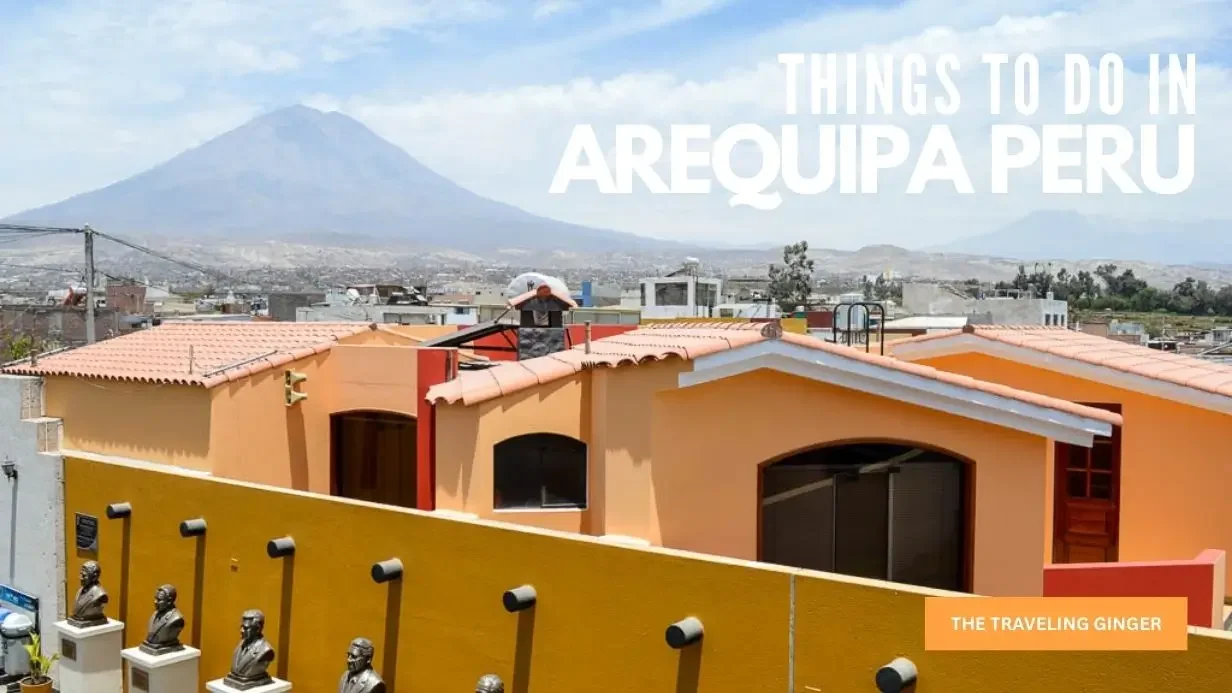
Located next to the church is the Mirador de Yanahuara. This is a gorgeous look out point to view the city of Arequipa and it's surrounding volcanoes. I'm pretty much obsessed with the white volcanic sillar rock, in case you couldn't tell. Many of the structures built here have phrases carved into them, and the arches themselves are made of ashlar, dating from the nineteenth century. The phrases are from various famous people of Arequipa and Peru. This is the perfect photo spot. You can see all three volcanoes from here and the arches are gorgeous.
Plaza de Armas
The Plaza de Armas is the main square in the historic district of Arequipa, Peru. Like most squares in South America, this one was really busy and hustling and bustling on the Sunday afternoon. It seems the these squares are an important part of life in Peru and other South American cities, as many families and friends flock to them to socialize on the weekends. Surrounding the square on three sides are many shops and restaurants, and particularly worth mentioning is the chocolate shop. Arequipa is also well known for its chocolate and I can promise you I haven't ever tasted better than the chocolate here! It is well worth your time to explore the square and its shops. The fourth side of the square hosts the Cathedral.
The Cathedral of Arequipa
The Cathedral is located on the north side of the Plaza de Armas. It is a twin-towered cathedral which has been largely rebuilt over the centuries, as a result of the earthquakes in the region. I did not know Peru was prone to earthquakes until I got there! Building commenced in 1540, but was only really completed in 1656. Again, earthquakes and fires led to its rebuilding over and over. It is an impressive building overlooking the main square. I didn't get a chance to go inside, but I am sure it is well worth the visit.
Monasterio de Santa Catalina
The Monasterio de Santa Catalina was one of my favorite things I did in Arequipa and Peru overall. The Monasterio de Santa Catalina is a monastery of nuns located in the historic district of Arequipa. It was built in 1579 and founded by a rich widow, María de Guzmán. She also became the first resident of the monastery. Her fortune became the monastery's and soon a number of young women entered the monastery. Soon, as the history goes, a number of women with great wealth and standing entered the monastery, bringing their servants and household goods with them. The monastery continued in this way for a number of years, with the women enjoying their luxuries but outwardly projecting a life of servitude to God and living a life of poverty. Soon Pope Pius XI got wind of this, and sent a Sister to investigate. The rich dowries were sent from Peru back to Europe and the servants freed, the nuns were giving the option to leave the monastery or continue as a nun in the true sense of the word. Throughout the remainder of the years, the monastery continued in this fashion, while the rest of Arequipa modernized. It was only until 1970 that the city required the monastery to install electricity and a water system. The monastery had no way to pay for these systems, and so the decision was made to open the monastery to the public. For the first time in centuries, the public could visit the monastery, with the current residents moving to a smaller, private and off-limits section of the monastery.
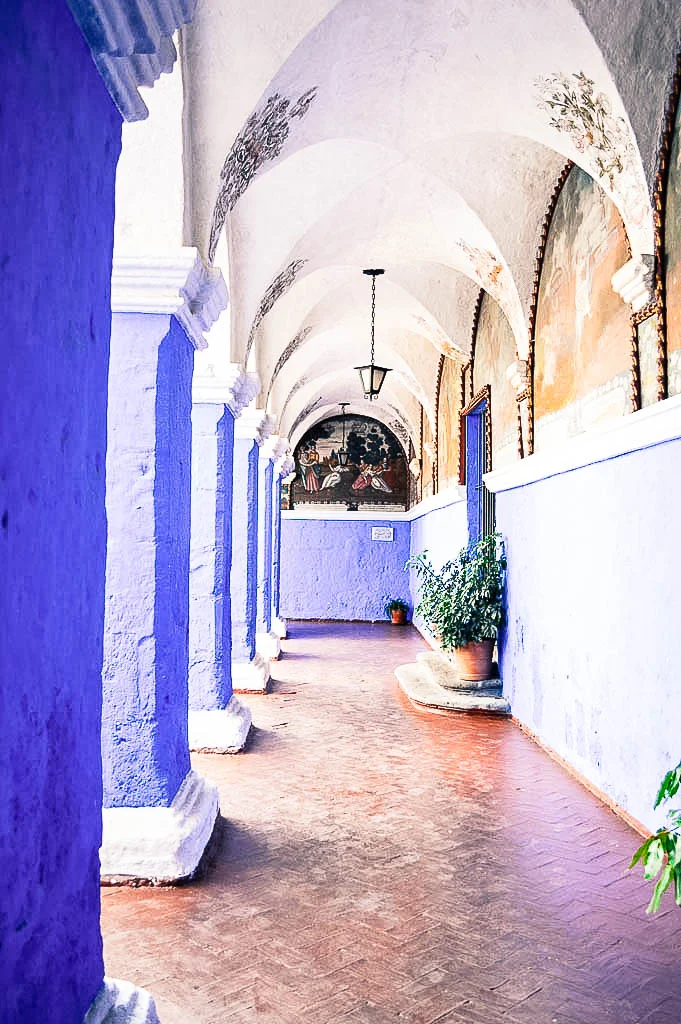
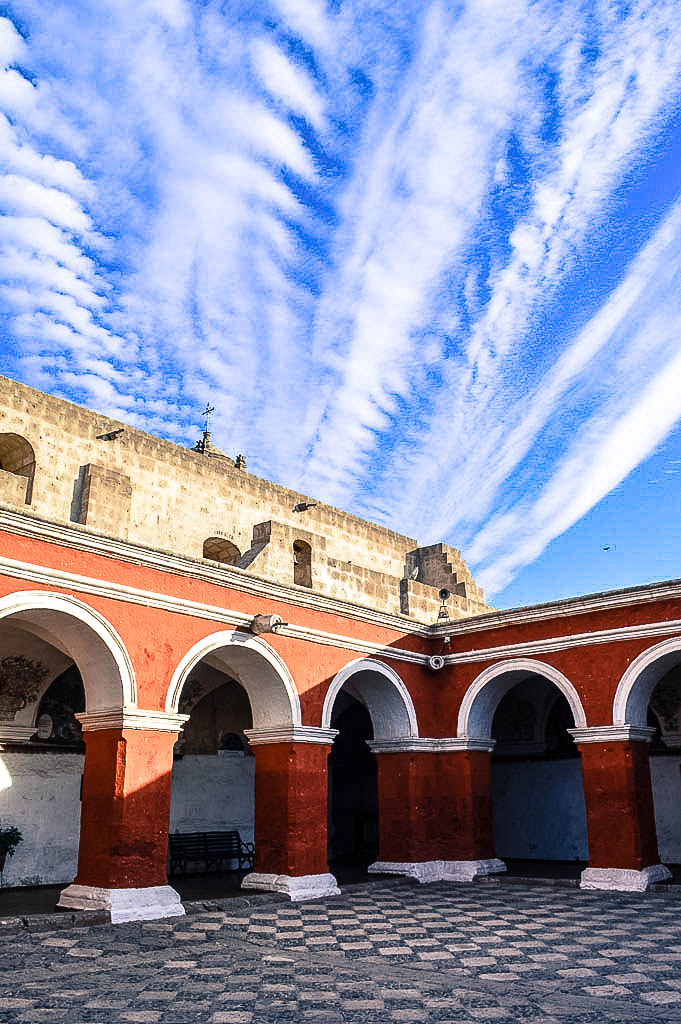
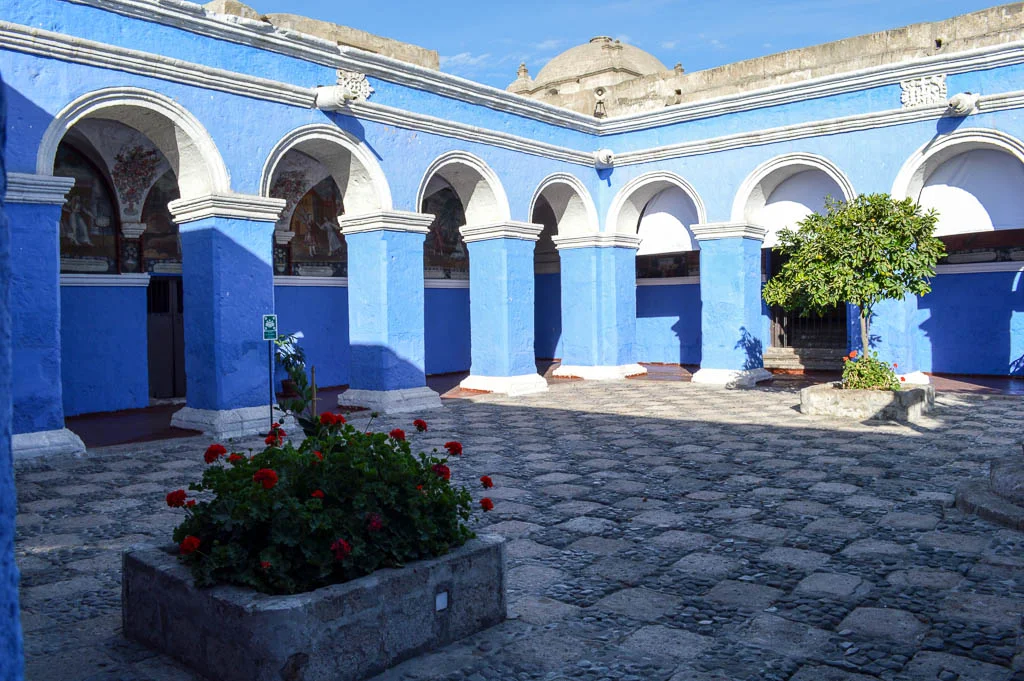
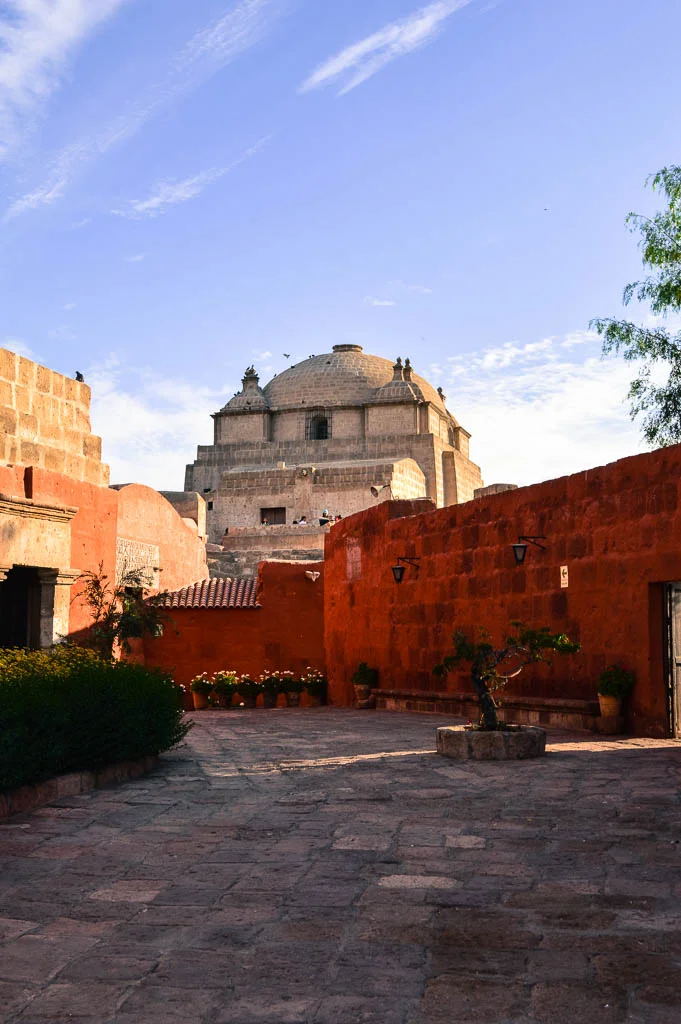
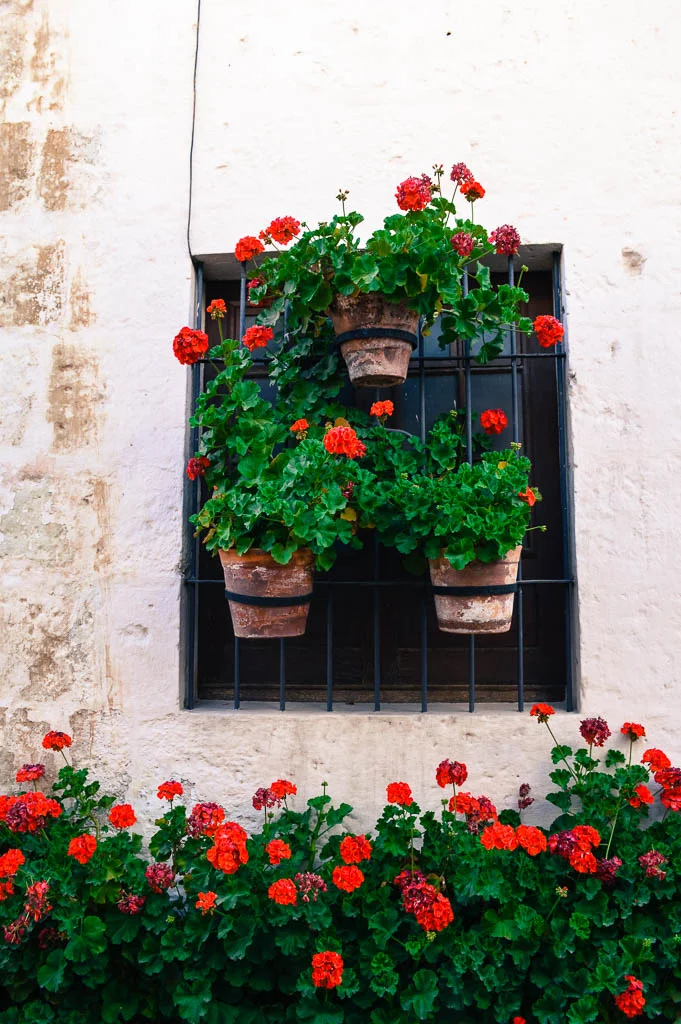
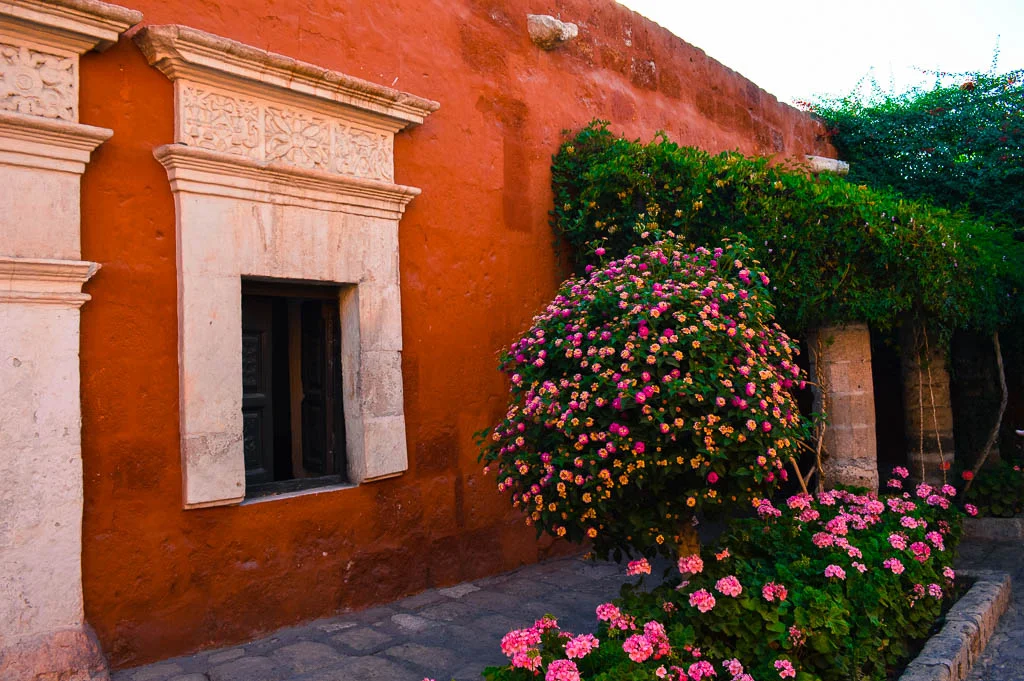
What I loved about this place was not only it's rich and intriguing history, but its beautifully painted walls and architecture. Like the rest of the city the monastery is also built from sillar rock, and has been rebuilt a number of times as a result of the earthquakes. Many of the walls are painted in beautiful shades of blues and reds. The halls, passages and squares are quiet and reflective, and there is a wonderful sense of peace and meditation within the walls of the Monastery. Definitely a must-see in Arequipa, Peru.
Other places to visit in Arequipa that I did not have time for:
Museo Santuarios Andinos (Andean Sanctuaries Museum): to see the Inca girl Juanita (discovered at the foot of a mountain, the girl has been preserved in ice for more than 500 years)
Iglesia de la Compania de Jesus: another beautiful church just off the Plaza de Armas, another example of sillar rock architecture and beautiful carvings
Day Trips or Things to see "Near" Arequipa
Surrounding Arequipa are numerous other things to do. Some of them require a day trip, and others are better to see on your way out of Arequipa to your next destination. The particular trip I was on drove us out of Arequipa through the Salinas and Aguada Blanca National Reservation, to the Mirador de Los Andes. We stopped over night in the town of Chivay, and then continued to Colca Canyon the following morning. You can also visit the three volcanoes located near Arequipa and trek to them. This is a popular itinerary in Arequipa. For my full itenaray in Peru, have a look at my Contiki Review of the Inca Panorama tour, as I traveled with them across Peru and to Machu Picchu.
Salinas and Aguada Blanca National Reservation
Salinas and Aguada Blanca National Reservation is a protected reserve that stretches between Arequipa and Colca Canyon, and for many travelers, it becomes an unexpected highlight of the journey. As we drove through, the terrain shifted into wide open plains dotted with vicuñas grazing against a backdrop of volcanoes and snow-dusted peaks. The light out here is incredible, especially in the early morning, and the sense of space is almost overwhelming. Peru is a truly magical country.
What makes Salinas and Aguada Blanca special is how untouched it feels. You pass small indigenous villages, stone corrals, and grazing lands that have supported local communities for generations. There are salt flats in the distance, wetlands that attract birdlife, and long stretches of road where the Andes and Peru feel endless. It is not flashy or crowded, but it is deeply atmospheric, and for me, it was stunning. I enjoyed the little stops we made by the side of the road to view the landscape around us.
Vicuna and Volcano in Salinas and Aguada Blanca National Reservation
If you’re looking for an easy day trip while you’re in Arequipa, Peru this is such a good option below. It’s a half-day experience that takes you beyond the city into some of the most unique landscapes in the region, from the quiet charm of Chiguata to sweeping volcano viewpoints and the surreal salt flats of the Salinas National Reserve. You’ll see reflective lagoons, spot camelids and high Andean birdlife, and get a real feel for the vastness of this part of Peru. It’s relaxed, scenic, and a really worthwhile way to experience more of what surrounds Arequipa. Just go slow and hydrate when at the high altitudes. Check out my guide for fending off altitude sickness in Peru.
Mirador de Los Andes
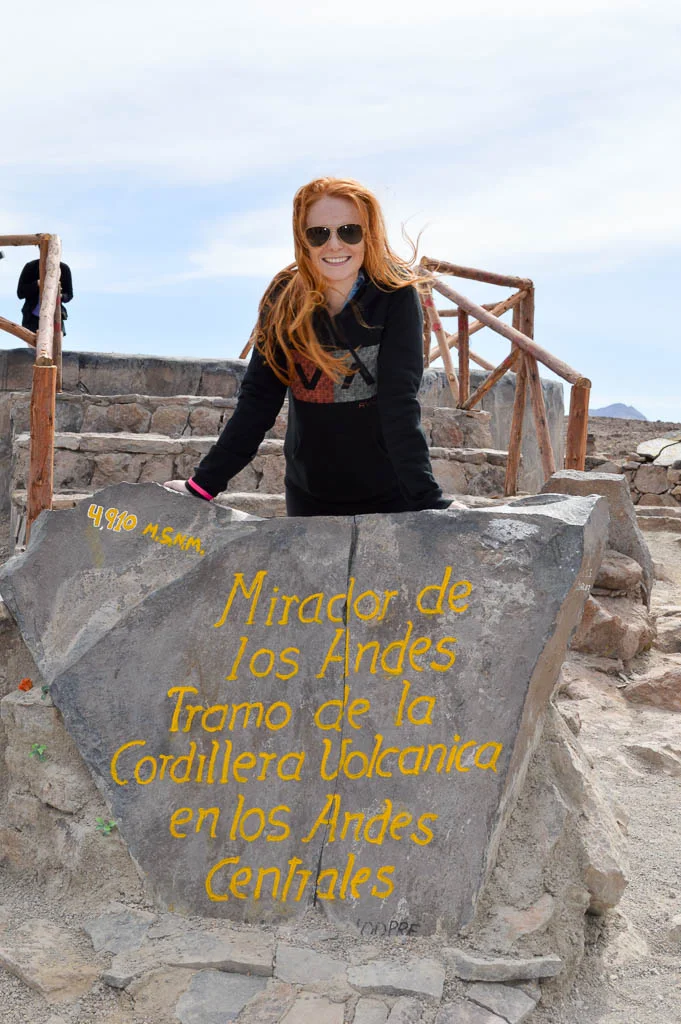
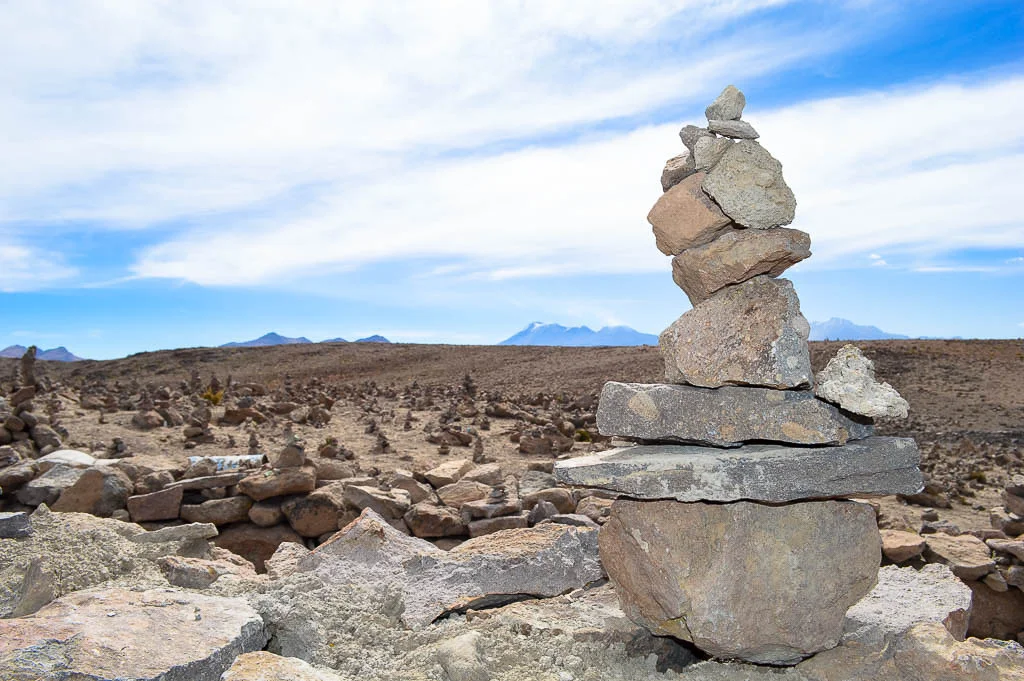
The Mirador de los Andes is a high-altitude viewpoint located on the route between Arequipa and Colca Canyon in southern Peru. It sits at roughly 4,900 meters (about 16,000 feet) above sea level, making it one of the highest points you will reach on a typical Colca Canyon journey. Most tours stop here briefly so travelers can take in sweeping views of the Andes and surrounding volcanoes. Stepping out of the vehicle, I could feel the altitude immediately, and I had to move slowly as I took in the sweeping views of the Andes around me. I could see volcanoes like Ampato, Sabancaya, and Hualca Hualca stretching across the horizon. It was a short stop, but a memorable one. Between catching my breath, snapping photos, and sipping coca tea, it felt like a quiet transition point, fully entering Peru’s vast, rugged highlands.
Colca Canyon
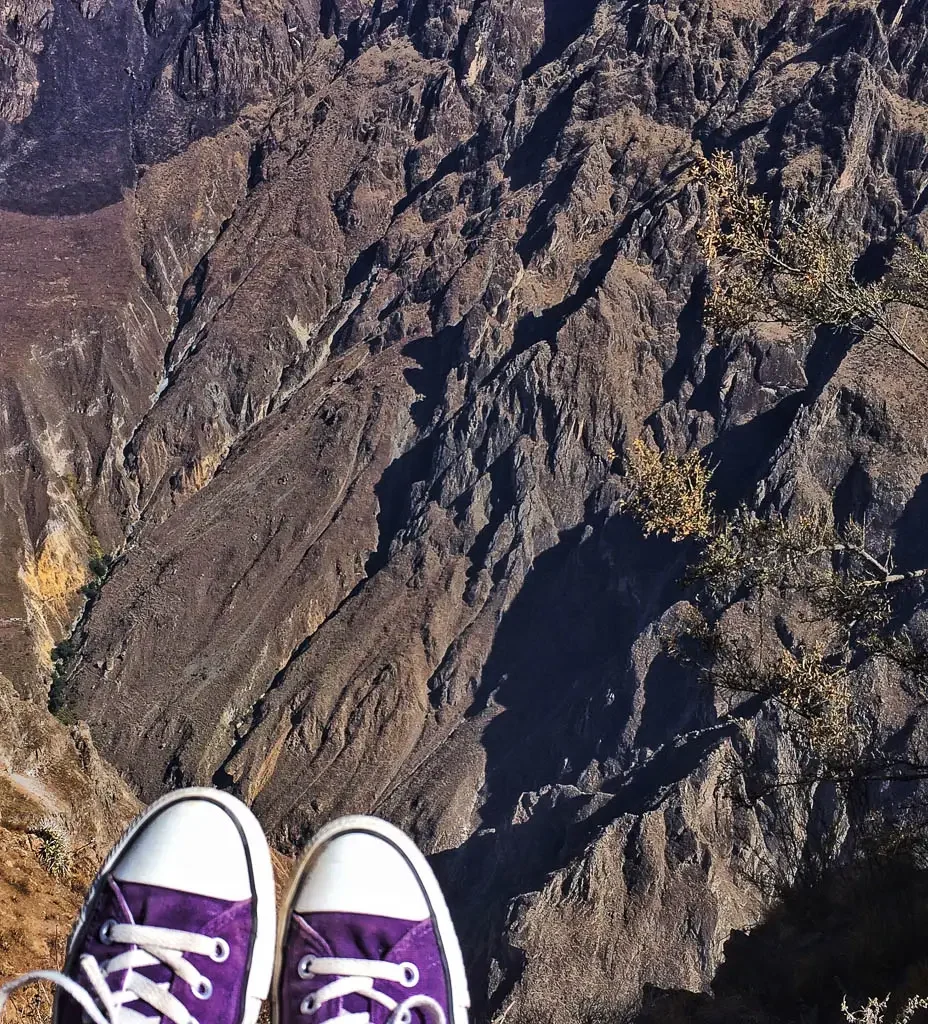
Colca Canyon was one of those places in Peru that completely caught me off guard, in the best way. Tucked away in the Andes not far from Arequipa, it is one of the deepest canyons in the world, but what I remember most is not the statistic, it is the silence, the scale, and the feeling of being very small in a very old landscape.
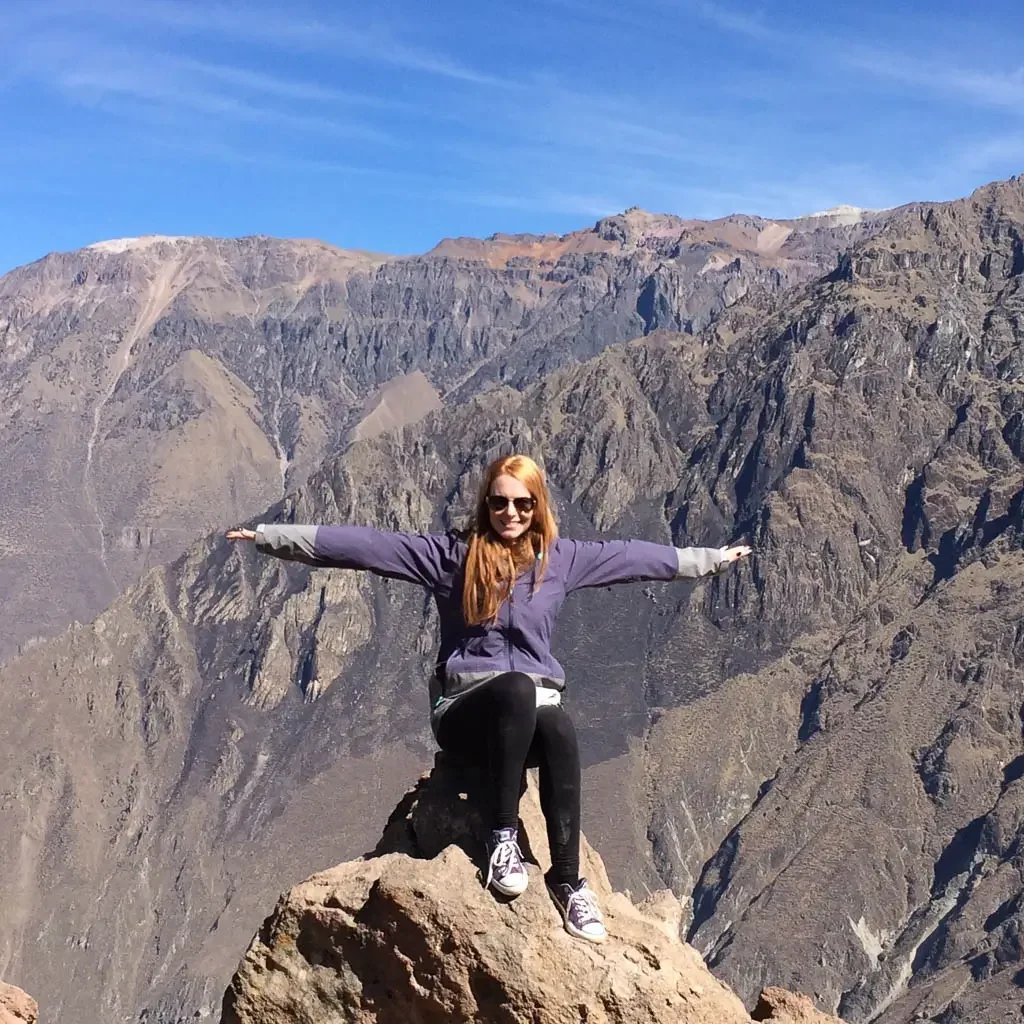
Getting there from Arequipa is surprisingly straightforward. Most travelers visit Colca Canyon on a one- or two-day tour that departs early in the morning, yes, very early. The drive takes about three to four hours and winds through high-altitude plains where you will likely spot llamas, alpacas, and vicuñas along the way. You can also go independently by bus to Chivay, the main gateway town, but honestly, a guided tour makes logistics and altitude adjustments much easier.
If you’re looking for a full-day adventure from Arequipa, this Colca Canyon tour below is absolutely worth considering. It’s a long day, but you’ll experience some of the most dramatic landscapes in Peru, from the vast beauty of Colca Canyon to spotting Andean condors soaring at the famous Cruz del Condor. Along the way, you’ll pass through the stunning Salinas and Aguada Blanca National Reserve, see alpacas and vicuñas in the wild, and stop at high-altitude viewpoints like Patapampa for sweeping views of the Andes. Add in a traditional Andean lunch and the option to relax in hot springs, and it’s an incredibly well-rounded way to experience the natural beauty surrounding Arequipa in just one day.
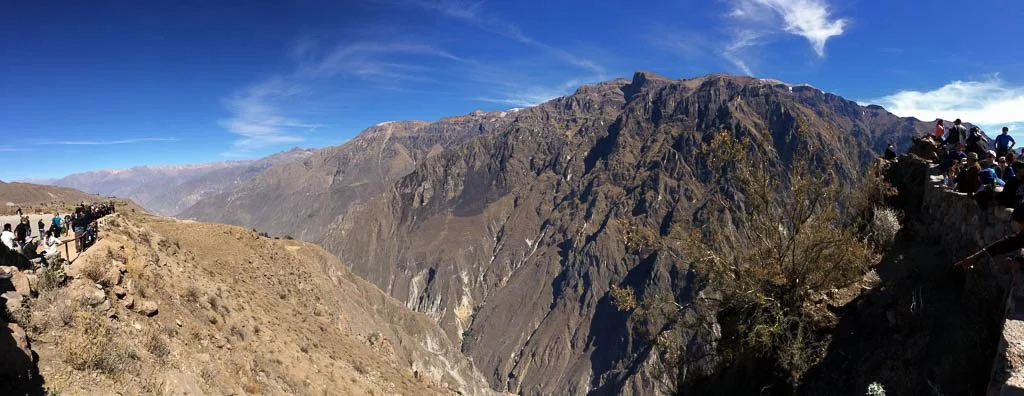
So why visit this part of Peru? Colca Canyon is not just about dramatic views, though the viewpoints are jaw-dropping. It is about watching massive Andean condors soar silently overhead, soaking in natural hot springs after a long day, hiking through terraced valleys that have been farmed for centuries, and passing through small villages that feel untouched by time. It is quieter than Peru’s headline attractions, but that is exactly the magic. And quiet is my favorite kind of magic! Trust me - an overstimulated teacher.
Where to eat in Arequipa
Peru completely surprised me when it came to food, and honestly, I didn’t fully appreciate just how incredible the cuisine was until I arrived in Arequipa. This city is known as one of Peru’s culinary capitals, and it was here that everything just clicked for me—from rich, traditional dishes like rocoto relleno to perfectly prepared meats and fresh, vibrant flavors. Every meal felt thoughtful, bold, and deeply rooted in local culture. If you’re even slightly interested in food, Arequipa is the place where you’ll truly understand why Peruvian cuisine is so celebrated. If you want a deeper dive into everything I ate (and what you absolutely shouldn’t miss), check out my full guide to what I ate in Peru. If you’re looking for some restaurant suggestions read more for where to eat in Arequipa, Peru.
El Tio Dario
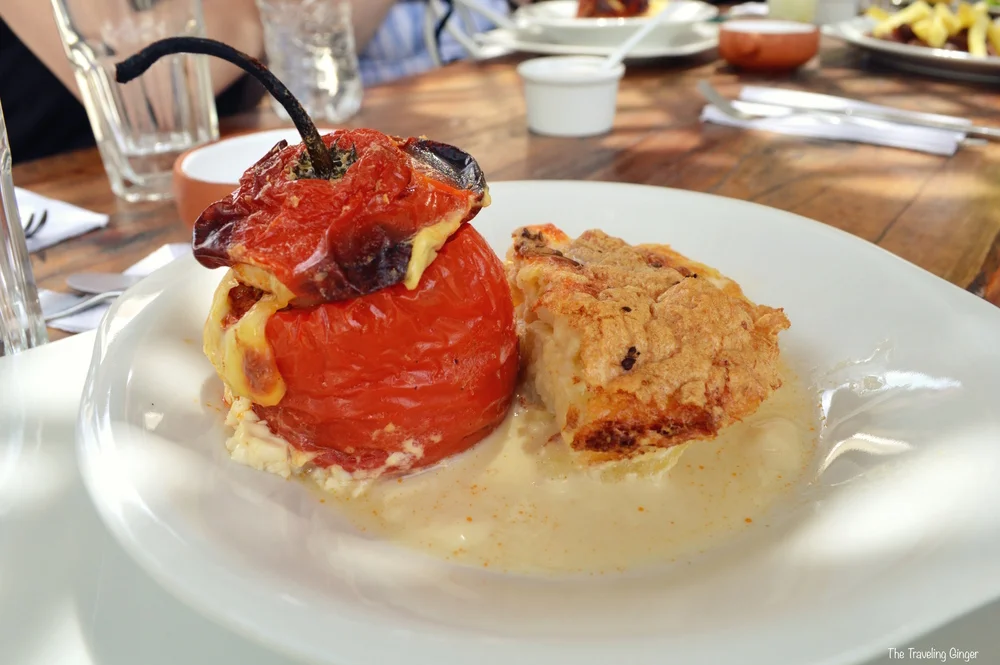
El Tio Dario is located a short walk from the Templo de Yanahuara and the Yanahuara walk way (see above). It has a beautiful setting, and we enjoyed our lunch outside under the wooden palisades. The menu boats an impressive variety of seafood dishes, and I ordered the Rocotto de Pellano. It was exquisite. The ambience and food here is perfect, and is definitely worth the trip!
Zig Zag Restaurant
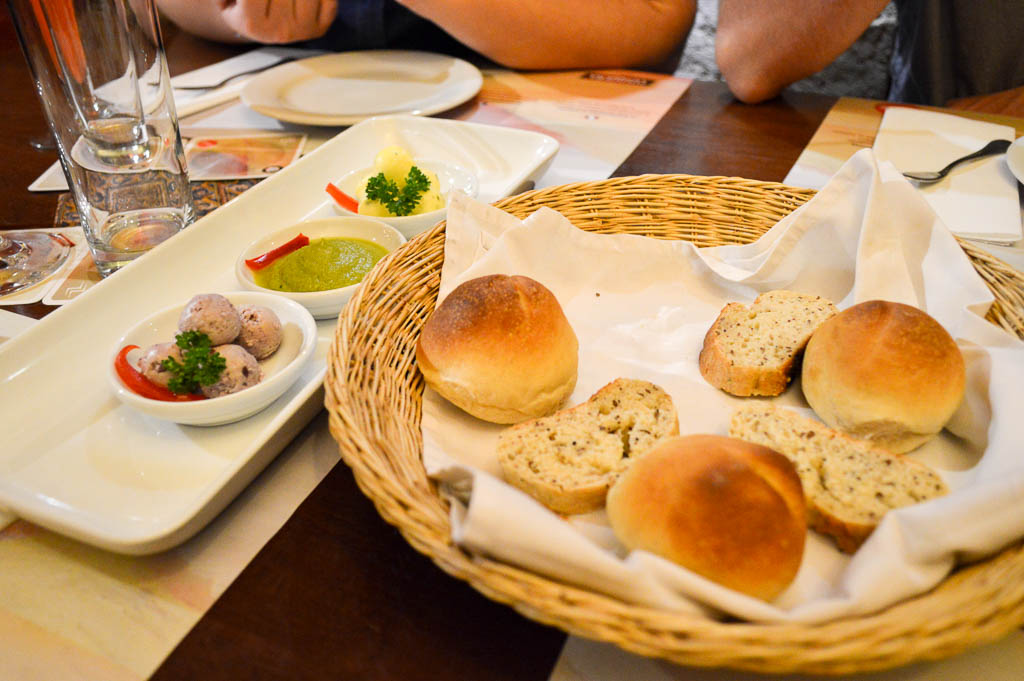
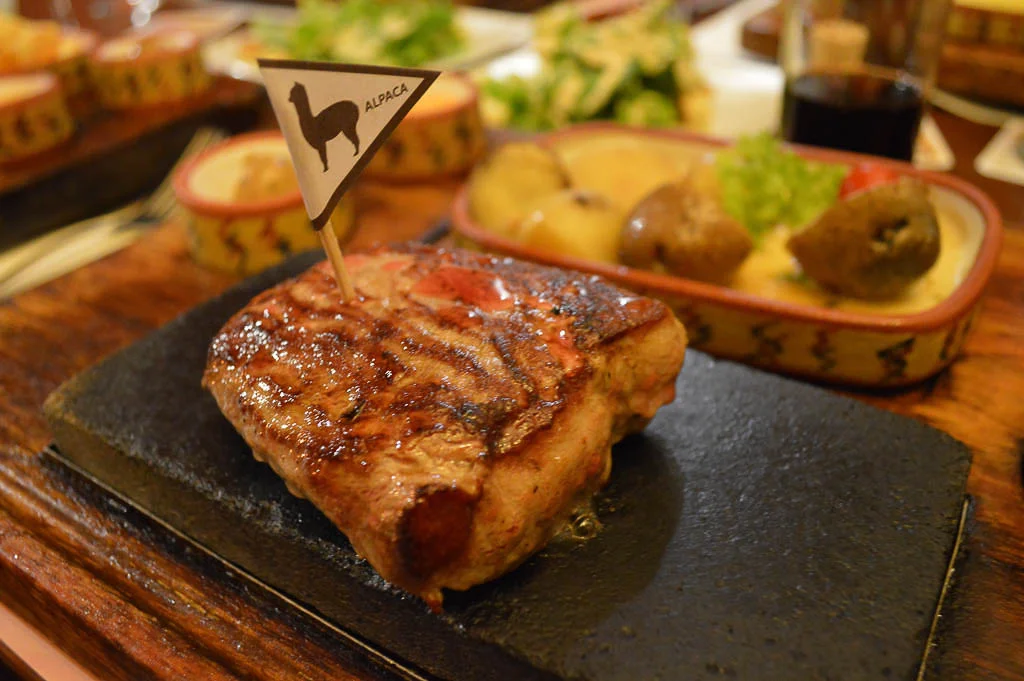
You know you are eating some of Arequipa's finest food when they boast the number two best restaurant in Arequipa, Peru on Trip Advisor. It definitely deserves its position here! Zig Zag is located opposite the Plaza de San Francisco. It's menu encompasses both European influences and Peruvian cuisine, including fondue - the chef is Swiss. Here you can order Alpaca which is served on a sizzling volcanic rock plate, and you are given a giant bib to wear for protection. The food here is absolutely stunning, and we enjoyed an excellent evening in the upstairs section of the restaurant. The ambience itself is gorgeous, and we had a wonderful time. If you want to get an idea of other meals you should eat in Peru, I have a whole section on what I ate in Peru (so much!), and what you need to eat at least once while you are in Peru.
Arequipa, Peru is one of those places that quietly stays with you long after you leave. From wandering through the white sillar streets and exploring historic landmarks like the Monasterio de Santa Catalina, to taking in sweeping views from Mirador de Yanahuara and venturing out to natural wonders like Colca Canyon, there is no shortage of unforgettable experiences here. Add in some of the best food in the country, and it is easy to see why this city stands out. If you are planning your trip and looking for the best things to do in Arequipa, Peru, I hope this guide helps you make the most of your time in the White City and inspires you to explore beyond the obvious.
What would you be most interested in seeing in Arequipa? Have you been here before? Tell me about your experience in the comments below! What's your favorite thing to do when traveling to a new country or city?